How to Make a Custom Plush Toy: A Complete Manufacturing Guide
If you have a character, mascot, brand idea, or original illustration and want to turn it into a physical stuffed product, you may be wondering How to Make a Custom Plush Toy. Creating a custom plush toy involves much more than simply sewing fabric together. A successful product requires careful design development, material selection, pattern making, sewing, stuffing, embroidery, finishing, and quality control.
Custom plush toys are increasingly popular among brands, retailers, event organizers, schools, organizations, promotional agencies, and businesses. They can be developed as promotional merchandise, mascot products, retail toys, corporate gifts, event souvenirs, or branded collectibles.
For businesses ordering from overseas, working with an experienced plush toy manufacturer can make the process easier. A professional factory can turn a digital design into a physical plush product while helping customers select suitable materials, dimensions, production methods, and packaging.
In this guide, we explain How to Make a Custom Plush Toy step by step, from the initial idea to finished production.
What Is a Custom Plush Toy?
A custom plush toy is a stuffed product manufactured according to a specific design or set of customer requirements.
Unlike standard plush toys, custom products can be created with unique:
- Shapes
- Characters
- Colors
- Sizes
- Facial features
- Logos
- Embroidery
- Clothing
- Accessories
- Packaging
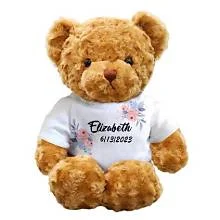
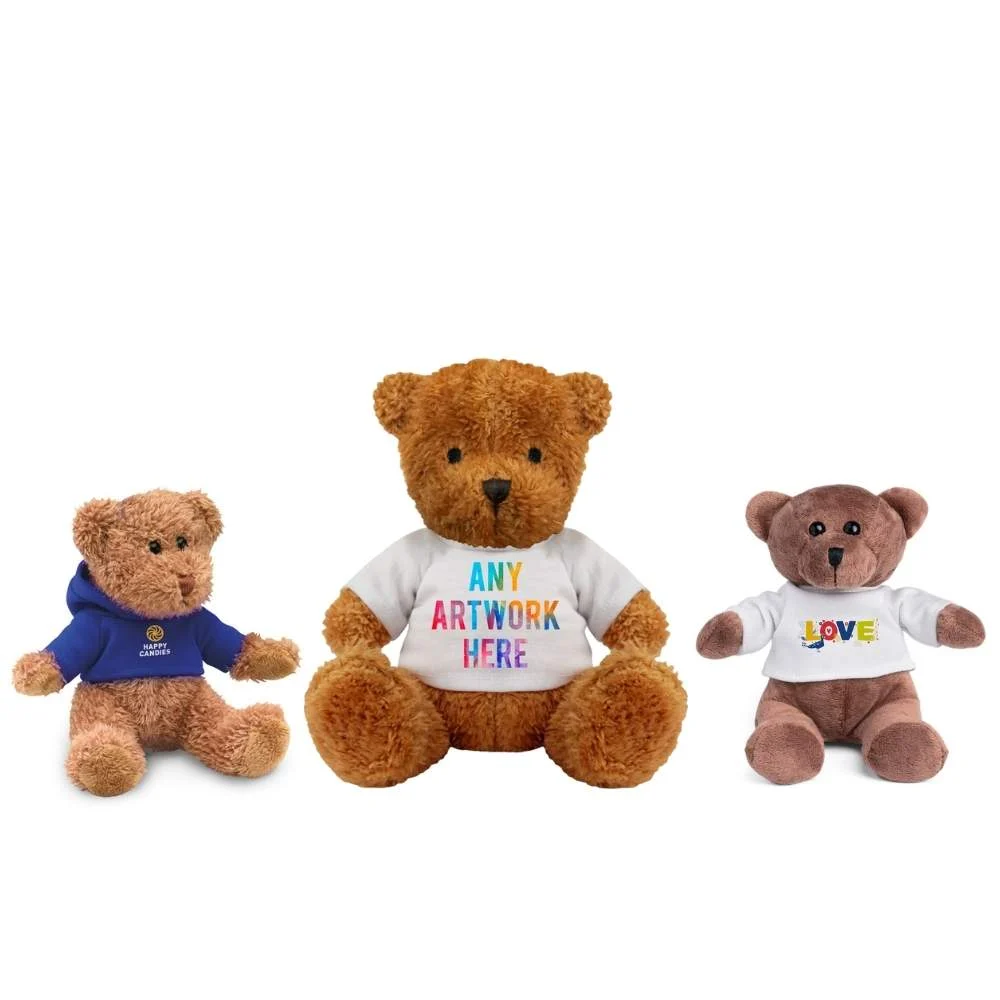
A custom plush toy can be based on an original character, company mascot, cartoon illustration, animal, logo, or other creative concept.
For businesses, this flexibility makes custom plush toys useful for branding and marketing campaigns. A company can turn its mascot or character into a physical product that customers can recognize and interact with.
How to Make a Custom Plush Toy: Step 1 – Create Your Design
The first step in learning How to Make a Custom Plush Toy is developing a clear product design.
You can start with a drawing, digital illustration, character image, mascot design, or reference photograph.
Ideally, the manufacturer should receive several views of the character, such as:
- Front view
- Side view
- Back view
- Top view
- Close-up details
The more information available, the easier it is for the production team to understand the intended appearance.
If your character has specific facial expressions, clothing, accessories, or unusual body proportions, these details should also be included in the design information.
For brands, it is useful to provide original artwork and brand guidelines so the manufacturer can reproduce the character accurately.
Step 2 – Determine the Size and Dimensions
The next step is deciding how large the plush toy should be.
Custom plush toys can be produced in many sizes, from small promotional items to large display products.
The size can affect:
- Material consumption
- Stuffing requirements
- Sewing time
- Packaging
- Shipping costs
- Overall production cost
For example, a small plush keychain requires a very different manufacturing process from a large mascot plush toy.
When requesting a quotation, specify the desired height and, if possible, the approximate width and depth of the product.
If you are not sure about the ideal size, a manufacturer can often recommend dimensions based on the design and intended use.
Step 3 – Choose the Materials
Material selection is another important part of How to Make a Custom Plush Toy.
The fabric determines much of the product’s appearance and texture.
Common plush toy materials include different types of polyester plush fabrics and other textile materials.
When choosing materials, consider:
- Softness
- Texture
- Thickness
- Color
- Durability
- Appearance
- Intended use
A teddy bear may require a soft and fluffy material, while a character with a smooth surface may require a different type of fabric.
For international customers, the manufacturer can recommend suitable materials based on the product design, target market, and production requirements.
Step 4 – Develop the Plush Toy Pattern
Once the design and dimensions are confirmed, the manufacturer creates a pattern.
The pattern determines how individual pieces of fabric will be cut and assembled into the final three-dimensional shape.
A custom plush toy may contain separate patterns for:
- Head
- Body
- Arms
- Legs
- Ears
- Tail
- Wings
- Clothing
- Accessories
The complexity of the pattern depends on the character.
A simple animal design may have relatively straightforward shapes, while a detailed mascot can require many individual components.
Pattern development is one of the most important technical stages because even small changes can affect the final proportions and appearance.
Step 5 – Create a Prototype Sample
Before starting bulk production, a manufacturer usually develops a prototype or sample.
The sample allows the customer to see how the original artwork has been transformed into a physical plush toy.
At this stage, customers can review:
- Shape
- Size
- Proportions
- Colors
- Fabric
- Facial details
- Embroidery
- Accessories
- Stuffing
- Overall appearance
If changes are needed, the pattern or materials can be adjusted before mass production.
For international buyers, approving a physical sample can be especially useful because it reduces the risk of producing a large quantity of products that do not match the intended design.
Step 6 – Prepare the Fabric
After the sample has been approved, production can begin.
The selected fabric is prepared according to the production requirements. Patterns are placed on the material, and the individual pieces are cut into the required shapes.
Accurate cutting is essential because every piece needs to fit correctly during sewing.
For large orders, factories may need to prepare a significant number of identical fabric components.
Organized cutting and material handling help improve production efficiency and maintain consistency across the order.
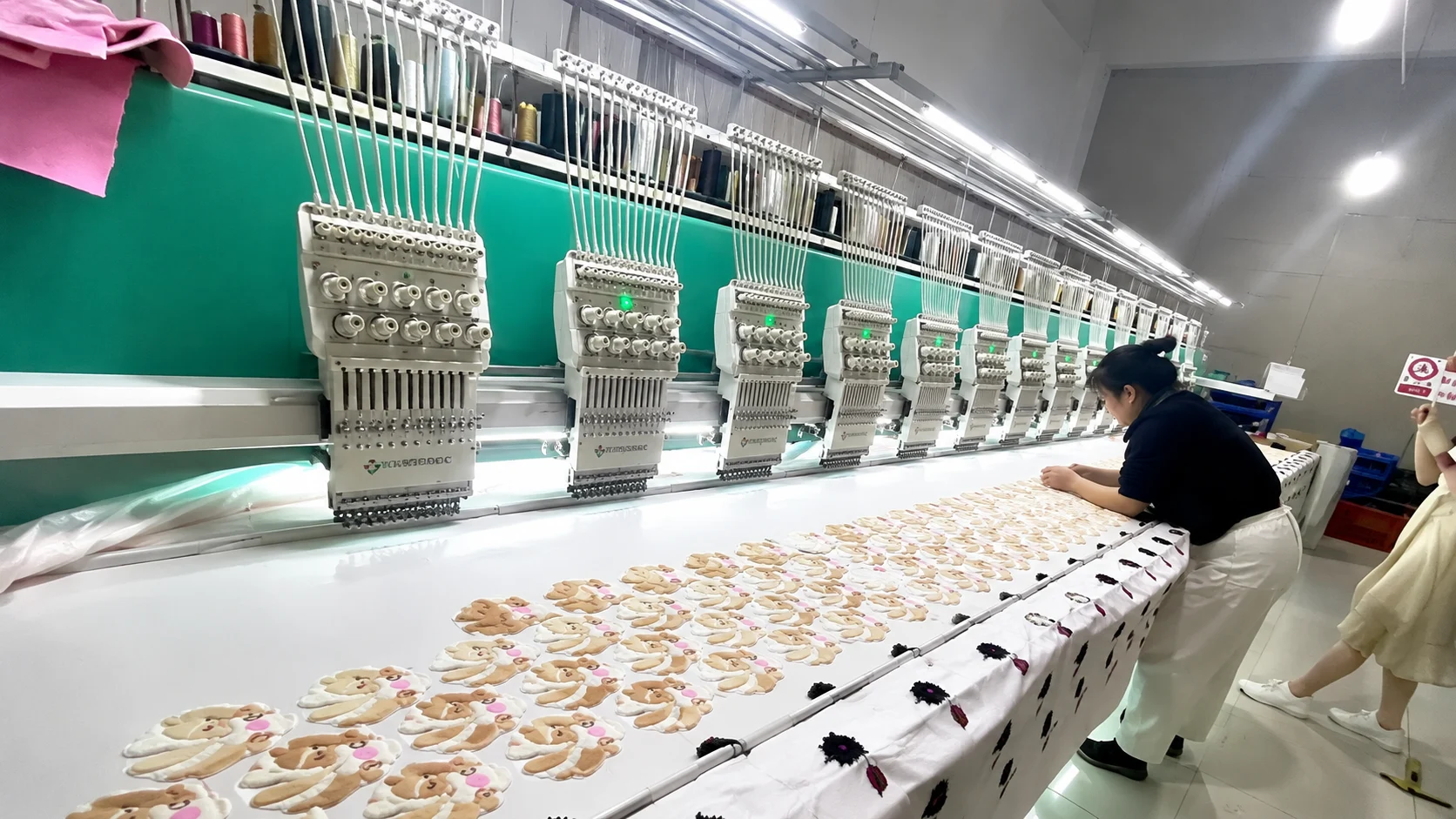
Step 7 – Add Embroidery and Printed Details
If your plush toy includes a logo, facial features, text, or other decorative details, these elements may be added before the main assembly.
Embroidery is commonly used for:
- Eyes
- Mouths
- Logos
- Names
- Symbols
- Decorative patterns
Embroidery can provide a professional and durable appearance, especially for branded plush toys.
The manufacturer may convert the customer’s artwork into a suitable embroidery file before production.
Small design details may need to be adjusted so they remain clear and visually accurate when reproduced with thread.
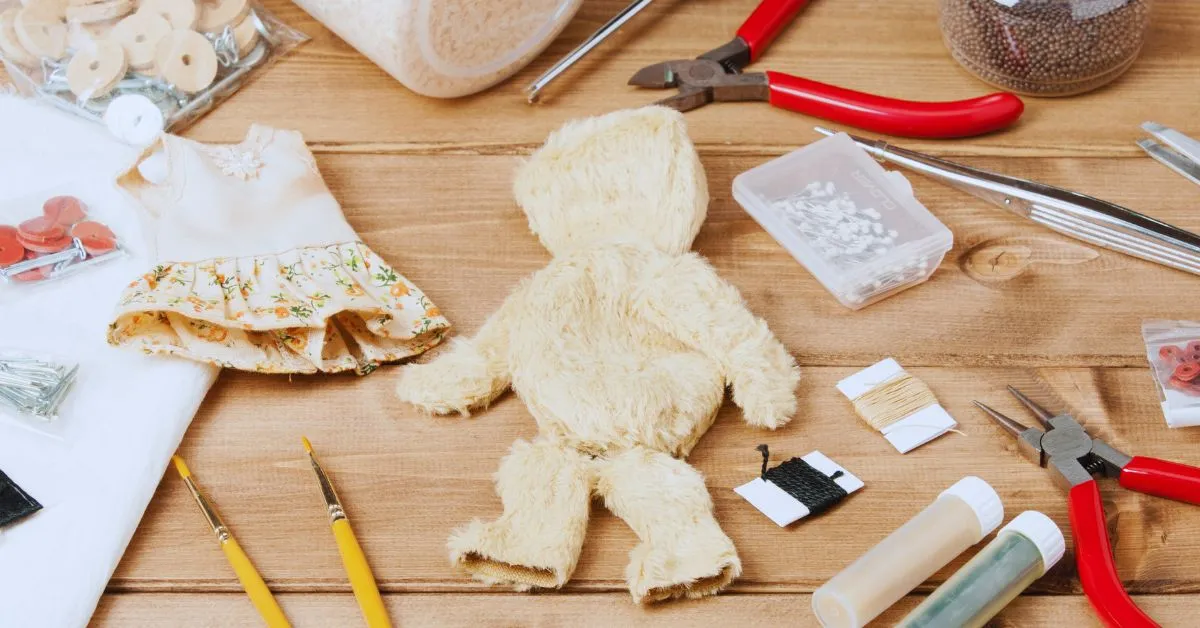
Step 8 – Sew the Plush Toy Components
The next stage is sewing.
The individual fabric pieces are joined according to the approved pattern.
Workers carefully assemble the head, body, arms, legs, ears, and other components.
During sewing, attention is given to:
- Seam quality
- Stitching
- Alignment
- Shape
- Proportions
- Fabric positioning
Custom character designs may require more complicated sewing techniques than standard plush products.
Experienced workers are therefore important when manufacturing products with unusual shapes or detailed designs.
Step 9 – Add the Stuffing
Once the main components have been sewn, the plush toy is filled with stuffing.
The filling material gives the product its characteristic soft and three-dimensional form.
The amount of stuffing needs to be controlled carefully.
If the product contains too little filling, it may look flat or lose its intended shape. If it contains too much, it may become excessively firm or change the proportions of the character.
The stuffing is therefore distributed carefully across the product to create the desired shape and softness.
Step 10 – Complete the Final Assembly
After stuffing, the remaining openings are closed and the different components are finalized.
Additional elements such as clothing, labels, accessories, ribbons, or decorative parts may also be attached.
Workers then inspect the plush toy to make sure the different components are positioned correctly.
The product should closely match the approved sample in terms of shape, color, size, and design details.
Step 11 – Quality Control
Quality control is a critical part of How to Make a Custom Plush Toy, particularly for commercial and international orders.
Before products are packaged, they can be inspected for common issues such as:
- Incorrect dimensions
- Loose stitching
- Uneven embroidery
- Incorrect colors
- Fabric defects
- Loose threads
- Incorrect accessories
- Poor stuffing distribution
- Shape inconsistencies
For bulk production, quality control helps maintain consistency between individual units.
This is especially important when custom plush toys represent a company’s brand or mascot.
Step 12 – Packaging the Custom Plush Toy
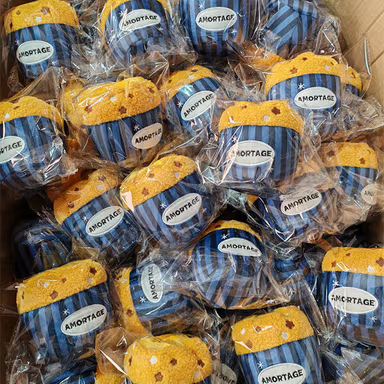
Once the products pass quality inspection, they can be packaged according to customer requirements.
Packaging options may include:
- Individual plastic bags
- Custom boxes
- Printed packaging
- Hang tags
- Product labels
- Brand tags
- Bulk cartons
Retail customers may require individual packaging, while wholesalers may prefer bulk packaging to reduce handling and transportation costs.
International customers should communicate packaging requirements before production so the manufacturer can include them in the project quotation.
How to Make a Custom Plush Toy for a Brand
Brands often create plush toys based on their mascots, logos, characters, or intellectual property.
For example, a company may have a cartoon mascot used in advertising and social media. Turning that mascot into a plush toy can create a physical extension of the brand.
The product can then be used for:
- Promotional campaigns
- Product launches
- Giveaways
- Retail merchandise
- Corporate gifts
- Events
- Customer loyalty programs
- Social media campaigns
A custom plush toy can therefore serve both as a product and a marketing tool.
How Much Does It Cost to Make a Custom Plush Toy?
The cost depends on the specifications of each product.
Factors that can affect pricing include:
- Product size
- Design complexity
- Materials
- Number of colors
- Embroidery
- Accessories
- Clothing
- Packaging
- Order quantity
- Sample development
- Production requirements
Larger quantities may provide better unit pricing because production costs can be distributed across more products.
If you want an accurate quotation, provide the manufacturer with your design, desired size, quantity, customization requirements, and packaging specifications.
Custom Plush Toy Manufacturing for International Buyers
For international businesses, choosing the right manufacturing partner is an important part of product development.
A reliable factory should be able to support the project from initial design review through sample development, bulk production, quality control, packaging, and export preparation.
Vietnam is an increasingly popular manufacturing destination for customized products, and businesses can work directly with factories to develop products according to their requirements.
For international customers, direct communication with the manufacturer can make it easier to discuss specifications, production quantities, materials, packaging, and delivery requirements.
OEM and ODM Custom Plush Toy Production
OEM and ODM manufacturing can be useful for businesses that want customized plush products.
With OEM production, the customer provides the design and specifications, and the manufacturer produces the product according to those requirements.
With ODM production, the manufacturer can provide additional support in developing a product based on the customer’s market needs.
Both options can help brands and businesses create customized plush products without building their own production facilities.
How to Make a Custom Plush Toy for Wholesale
Wholesale customers typically need to consider production quantity, consistency, packaging, and shipping.
When placing a bulk order, it is important to approve the product specifications before mass production begins.
A typical wholesale workflow may include:
- Submit the design
- Discuss product specifications
- Select materials
- Develop a sample
- Review and approve the sample
- Confirm quantity and packaging
- Begin bulk production
- Conduct quality inspection
- Pack the finished products
- Prepare the order for shipment
Following a structured process can make large-scale production easier to manage and reduce misunderstandings between the buyer and manufacturer.
How to Make a Custom Plush Toy With a Professional Manufacturer
While it is possible to create a simple plush toy by hand, commercial-quality custom plush products require specialized equipment, materials, patterns, and production skills.
Working with a professional manufacturer can provide access to:
- Pattern development
- Textile cutting equipment
- Industrial sewing
- Embroidery machines
- Stuffing equipment
- Quality control
- Bulk production
- Packaging
- Export preparation
This makes professional manufacturing particularly suitable for businesses that need consistent products in larger quantities.
Why Choose Our Factory for Custom Plush Toy Production?
Our factory provides customized plush toy manufacturing services for businesses, brands, retailers, promotional agencies, event organizers, and international buyers.
We can support different stages of the manufacturing process, from reviewing customer designs and developing samples to producing customized plush toys in bulk.
Our production capabilities can include:
- Custom plush toys
- Custom teddy bears
- Mascot plush toys
- Promotional plush products
- Embroidered plush toys
- OEM manufacturing
- ODM manufacturing
- Wholesale production
- Custom packaging
Our goal is to help customers turn their ideas into finished products while maintaining consistent quality throughout the production process.
Conclusion
Learning How to Make a Custom Plush Toy involves understanding the complete process from design to finished product. A typical manufacturing workflow includes design development, size selection, material selection, pattern making, sample production, fabric cutting, embroidery, sewing, stuffing, finishing, quality control, packaging, and export preparation.
For brands and international businesses, working with an experienced manufacturer can simplify the process and provide better control over product quality, customization, and bulk production.
Whether you want to create a custom mascot, branded teddy bear, promotional plush toy, or original character merchandise, the right manufacturing partner can help transform your concept into a finished product.
If you are looking for a custom plush toy manufacturer in Vietnam, send us your design, preferred size, estimated quantity, materials, and customization requirements. Our team can review your project and discuss suitable production options for your domestic or international market.